
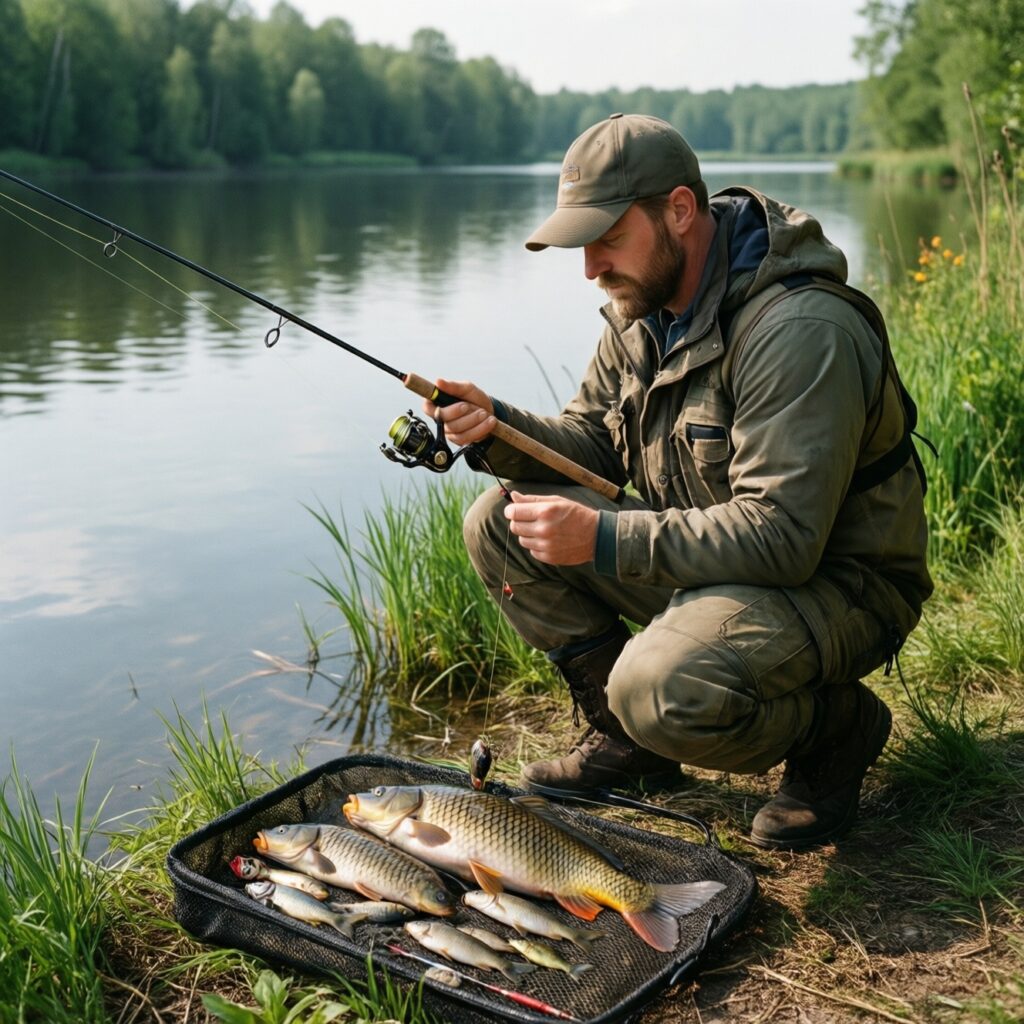
Searching for Carp24 may lead you to carp-fishing videos, discussions, or other material using that name. A video can be a useful way to see how tackle is assembled and used, but a confident presentation is not proof that a method will work in every water. Treat each clip as a demonstration to assess, not a guarantee. The best approach is to separate what you can directly observe from what the creator claims, then test relevant ideas within the rules of the water you fish.
Start by identifying what the video actually shows
Before adopting a tip, note the context: is the clip about a real fishing session, a close-up tackle demonstration, a product discussion, or a fishing game? These formats answer different questions. A game may illustrate an idea, but its fish behaviour, equipment and results do not establish what will happen on a real lake or river. A short rig close-up may show assembly clearly while leaving out how the rig performed over a full session.
For a real-world session, look for details that help explain the result: the type of water, approximate conditions, target depth or area, session length, and how the angler presented the bait. Not every useful video will include every detail. The point is to avoid treating a catch as proof that one particular bait or rig caused it when several factors could have contributed.
How to evaluate a rig demonstration
A good rig demonstration should let you follow the components and understand how they work together. Watch the assembly more than once if necessary. Check whether the hook, line or hooklink, knot, bait attachment and any added components are visible. Ask what each part is meant to do, rather than copying a complicated setup because it looks effective.
- Look for a complete explanation. The angler should make clear which components are being used and how they are joined. If a crucial knot or connection is hidden, do not guess at it before fishing.
- Check the finished setup. Consider whether the hook point is clear, the bait is secure, and the components appear correctly seated. Follow the tackle maker’s guidance for the products involved.
- Understand the intended situation. A rig designed for one bait presentation or bottom condition may not suit another. Ask whether the explanation gives a reason for the choice.
- Test safely before casting. Assemble the rig carefully and check that it works as intended in a controlled, shallow setting where practical. Avoid putting fingers near an exposed hook point.
Be cautious with claims that a rig is universally best or automatically prevents lost fish. Hooking and landing depend on the whole setup, how it is presented, the fish’s movement, and the angler’s handling. A clear demonstration is more useful when it explains limitations as well as advantages.
Assess bait advice in context
Bait recommendations are most useful when they explain the purpose of the bait and how it was presented. A video might show a hookbait, loose feed, or a combination, but a successful catch alone does not prove that the same choice will work at a different venue. Carp may respond differently according to feeding pressure, available natural food, temperature, water conditions and what other anglers are introducing.
When considering bait advice, ask whether the video distinguishes attraction from feeding quantity. A small amount of bait can be a deliberate starting point; adding more is not automatically better. If you try a new approach, begin conservatively and observe what happens rather than copying a large feeding campaign without knowing the water. Check venue rules before using any bait or introducing particles, and prepare bait safely according to its packaging or reliable handling guidance.
Keep a simple record of your own trials: date, conditions, location type, bait and presentation, time spent, and any signs of fish activity. This makes it easier to judge whether a result came from the bait, the situation, or a change in several factors at once.
Read catch reports without overgeneralizing
A catch report can show that a fish was landed during a particular session. It may not establish where the fish was caught, what exact factor brought it to the bait, or whether the method is repeatable. Look for a clear account of the session and distinguish observable details from speculation. One fish is a result, not a controlled comparison between rigs or baits.
Consider whether the report includes unsuccessful periods or only the final catch. Selective editing is normal in short-form video, but it can leave out hours of waiting, changes in approach, or other relevant events. Use catch reports for ideas and motivation, then judge techniques against your own conditions over more than one attempt.
Turn a video idea into a sensible test
- Choose one practical change, such as a different hookbait presentation, rather than changing rig, bait and location all at once.
- Check that the method suits your tackle, experience and the water’s rules.
- Keep other choices as consistent as possible so the comparison is meaningful.
- Record the result, including periods without a bite, and decide whether the idea merits another trial.
Handle carp with care, use suitable landing and unhooking equipment, and follow local fishery rules and fish-care guidance. If you are evaluating Carp24 or any other carp-fishing material, the most dependable lesson is not a single supposedly perfect method. It is a way to inspect demonstrations critically, adapt advice to your water, and learn from repeatable observations rather than promises.