
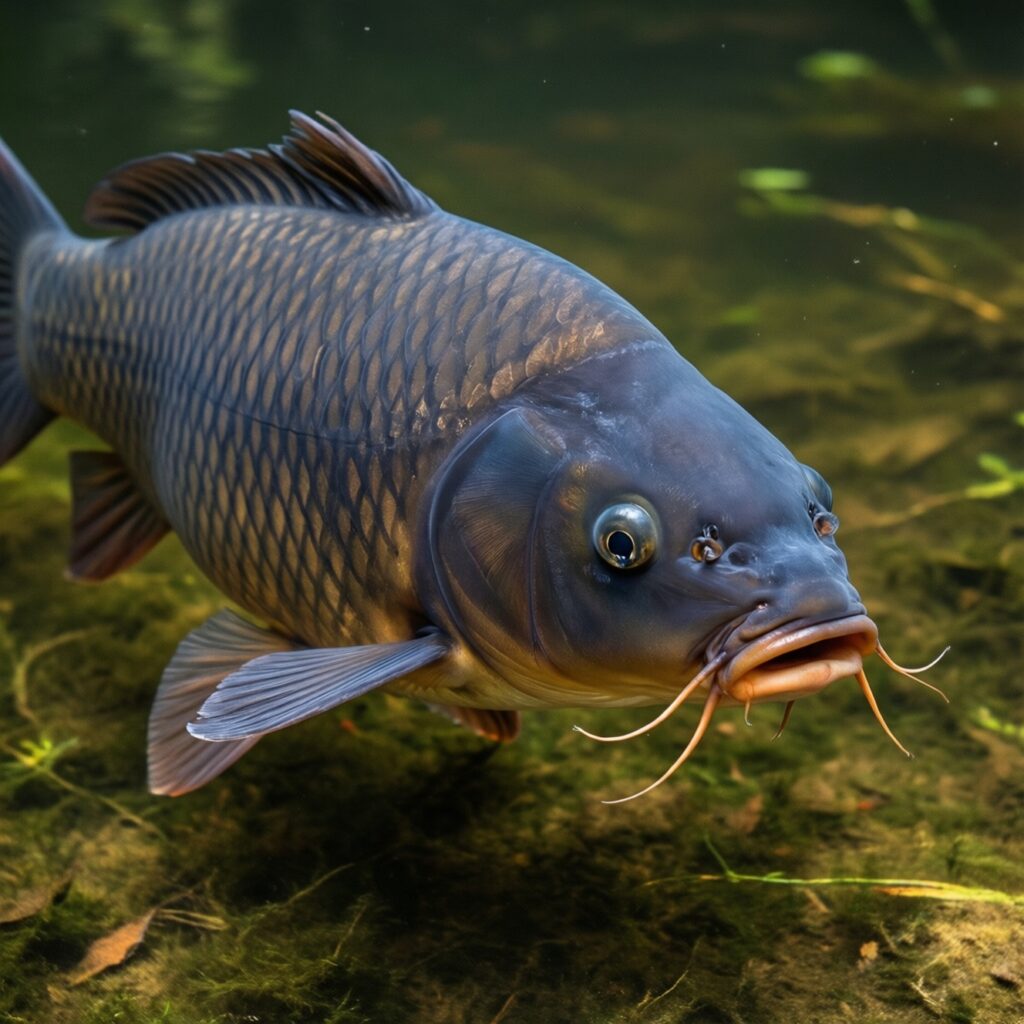
The common carp (Cyprinus carpio) is a freshwater fish recognized by its deep body, small mouth, two pairs of barbels, and, in the fully scaled form, scales covering most of its body. It feeds mainly near the bottom but can take food at other depths. For anglers, its location and feeding response depend on the water, season, and available food.
Common Carp: Essential Field Notes
- A fully scaled common carp has scales across its body; scale patterns vary between individual fish.
- Carp often forage over soft bottoms, weed edges, and other areas with accessible natural food.
- If fish show near the surface, do not assume they are feeding on the bottom; watch their behavior before choosing a presentation.
- Adjust bait, hook arrangement, and tackle to the venue, likely fish size, and local rules.
- Quiet observation and accurate presentation are more useful than repeatedly changing several variables at once.
How to Identify a Scaly Common Carp
The common carp is a member of the carp family and is commonly identified by its robust, deep body, large head, downturned mouth, and two pairs of barbels near the mouth. Its coloration can vary with habitat and individual fish, so color alone is not a reliable identifier.
A scaly or fully scaled common carp has scales covering most of the body in a relatively regular pattern. Mirror carp, by contrast, have fewer, larger scales arranged irregularly, while leather carp have very few visible scales. These are scale-pattern forms of common carp, not a basis for assuming that every fish will have the same appearance.
For common carp fishing, treat identification and behavior as separate questions: body shape and barbels help identify the fish, while feeding signs and location help determine how to fish for it.
Where Common Carp Feed and Hold
Carp move around a waterbody to find food and suitable conditions. If you are trying to locate them, check likely holding areas and then look for signs of active feeding:
- Soft-bottom areas: If the bottom holds natural food, carp may root through it. Use a presentation suited to the bottom so the hook bait does not disappear into silt or debris.
- Weed edges and openings: If vegetation provides cover or food, fish may patrol its edges. Cast to clear pockets or along the boundary rather than placing tackle blindly into dense weed.
- Shallows: If the water is warm and undisturbed, carp may enter shallow areas. Watch for movement before approaching or casting, since disturbance can push fish away.
- Changes in depth or bottom type: If a shelf, channel, or firm patch borders softer ground, it can be worth checking as a travel route or feeding area.
- Visible signs: If you see bubbles, mud clouds, rolling fish, or disturbed vegetation, observe whether the activity repeats in one area before choosing a spot.
- Windward margins: If wind pushes surface food toward a bank, investigate that margin, but confirm fish activity rather than relying on wind direction alone.
Seasonal Movements and Feeding Patterns
- Cold periods: If the water is cold and fish activity is limited, search patiently for likely holding areas and use a modest amount of bait. A slow response does not necessarily mean carp are absent.
- Warming water: If shallow areas warm and fish begin moving more, check margins, weed edges, and other feeding routes. Keep an eye on disturbance and avoid casting repeatedly over visible fish.
- Warm weather: If carp are cruising near the surface, they may be moving rather than feeding. Observe first; consider a surface presentation only when fish show interest in food at that depth.
- Changing conditions: If wind, temperature, or water clarity shifts, reassess the fish’s likely position instead of assuming yesterday’s productive spot will remain active.
- Spawning activity: If fish are visibly occupied with spawning, feeding may be unreliable. Follow local rules and give spawning fish space where required.
Choosing Bait and Tackle for Carp
There is no single best bait for common carp in every venue. Start with what the fish can encounter naturally and what local regulations allow; then adjust based on signs of feeding and the response to a small, controlled baiting approach.
Bait options to consider:
- If carp are feeding on the bottom, try a hook bait that remains visible and presented cleanly over the substrate.
- If small fish or nuisance species remove bait quickly, use a more durable bait or adjust its size and placement.
- If the water is clear or fish appear cautious, reduce unnecessary bait and use a natural-looking presentation.
- If fish are taking food at the surface, use an appropriate floating bait and a presentation suited to surface feeding.
- If you are unsure what the venue’s carp respond to, begin with a familiar, simple option rather than introducing several different baits at once.
Tackle choices and limits:
- If fishing open water, choose a rod, reel, line, and hook arrangement that can control the fish without being unnecessarily heavy.
- If fishing near weed, snags, or obstacles, use tackle with enough strength to steer a hooked fish away from danger; do not cast into hazards you cannot fish safely.
- If the bottom is soft or weedy, adapt the hook bait and rig so the presentation is not masked.
- If using a landing net, unhooking mat, or other fish-care equipment, make sure it is ready before casting.
- Check local rules for permitted hooks, bait, rigs, and fish handling, because requirements vary by waterbody.
Practical Methods for Locating and Landing Carp
Common carp fishing is often more effective when each change answers a specific observation. Use these practical checks to avoid common errors:
- Do not equate signs with certainty. If bubbles or surface movement appear, watch for repeated activity and distinguish feeding from fish simply passing through.
- Do not overfeed by default. If you have little evidence of active fish, introduce bait sparingly and assess whether the area produces a response.
- Do not change everything at once. If a presentation is not producing, adjust one factor-such as location, bait, or depth-so you can judge the result.
- Do not assume carp always feed on the bottom. If fish are visibly taking food higher in the water, match their feeding depth rather than insisting on a bottom presentation.
- Do not rush the landing. If a carp is hooked, maintain steady pressure and guide it away from snags when possible. Keep the landing net ready and handle the fish carefully at the water’s edge.
For common carp fishing tips that transfer between venues, prioritize observation, a clean presentation, and controlled changes. Local conditions still determine which spot and setup are appropriate.
A Pre-Session Checklist for Common Carp
Before casting, use this short sequence: if you find signs of fish, choose a safe spot; if the bottom is soft or weedy, adapt the presentation; if activity is unclear, start with little bait and observe.
- Check local rules and prepare suitable fish-care equipment.
- Look for carp activity and assess wind, depth, cover, and bottom conditions.
- Choose a bait and tackle setup suited to the observed feeding depth and likely obstacles.
- Introduce bait carefully, then change one variable at a time in response to what happens.
What Anglers Want to Know About Common Carp
Is a scaly carp a different species from a mirror carp?
No. Scaly and mirror carp are scale-pattern forms of common carp. A fully scaled fish has scales across most of its body, while a mirror carp has fewer, larger scales in an irregular pattern.
Where should I look for common carp?
Check soft-bottom feeding areas, weed edges, shallows, and changes in depth or substrate. If you see signs of fish, observe whether they repeat before choosing where to cast.
What is the best bait for common carp?
There is no universally best bait; the right choice depends on the venue, conditions, and what carp are feeding on. Start with a suitable, simple option and adjust based on observed activity.
Do common carp always feed on the bottom?
No. Carp often forage near the bottom, but they can feed higher in the water or at the surface. If you see fish taking food at another depth, match that behavior where practical.
How should I change my approach in cold water?
If fish activity is subdued, search patiently and avoid assuming that more bait will attract them. Use a presentation that remains clear and accessible on the bottom.
What tackle should I use for common carp?
Choose tackle that suits the likely fish size, venue, and nearby hazards. If weed or snags are present, use equipment strong enough to control the fish safely, while following local rules.
How can I avoid spooking carp?
Approach quietly, avoid repeated casts over visible fish, and watch their movement before settling on a spot. If fish leave an area after disturbance, give them time or look for another feeding route.
Author: Марина Кузнецова