
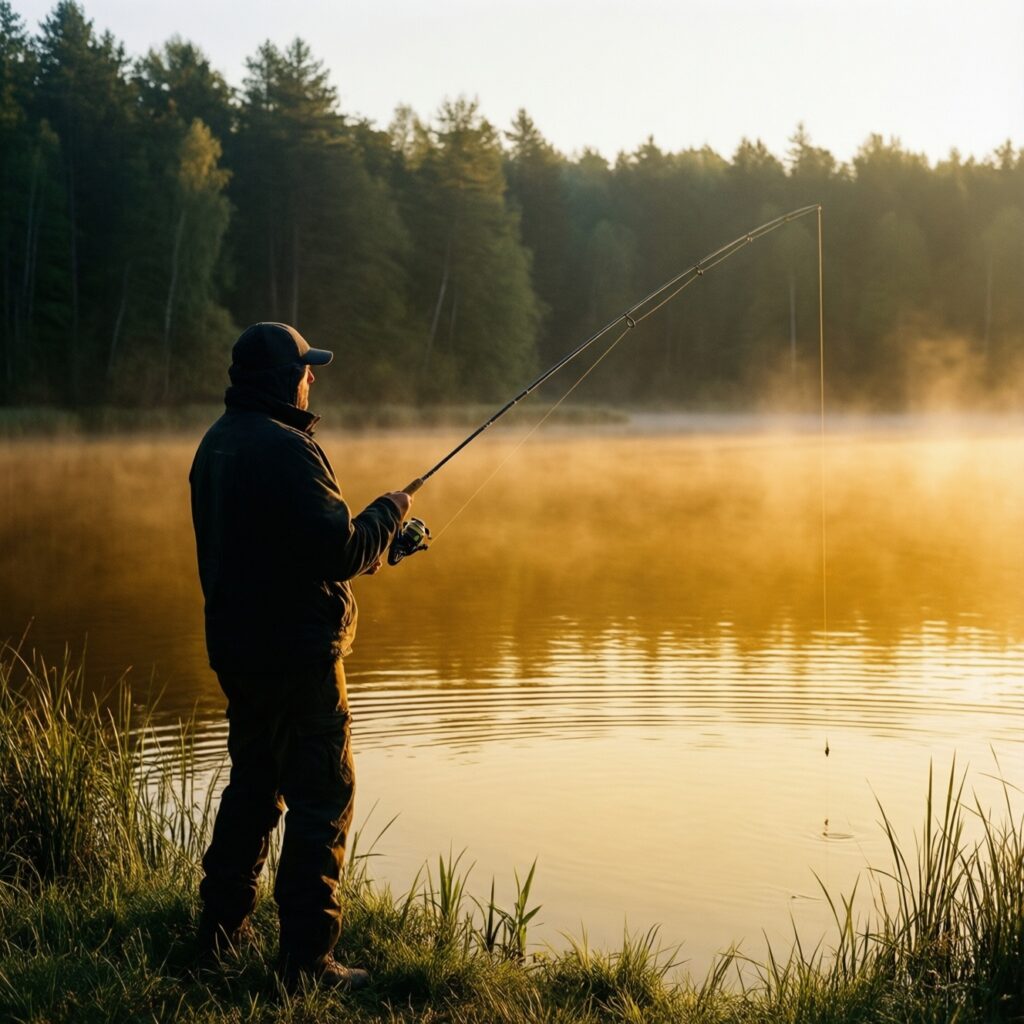
“Amber Lake” is not enough information on its own to identify a real fishing destination. The name may refer to a lake in a fishing game, a local real-world lake, or a place listed under a longer regional name. Before choosing tackle or planning a trip, establish which waterbody you mean. That simple check prevents a common mistake: treating game information as real-world guidance, or assuming that a real lake’s rules and fish apply to a simulated venue.
First, work out which Amber Lake you have found
Start with the context in which the name appears. A game menu, catch database, quest, or discussion of virtual equipment usually points to a simulated venue. A real-world reference should be tied to a location, such as a town, county, state, or country. Look for those details in the listing or ask the person who provided the name. If several places share it, a nearby road, park, watershed, or administrative region can help distinguish them.
- Game water: Check the game’s own location description, species list, unlock requirements, and in-game conditions. Treat those as rules for that game only.
- Real lake: Confirm the exact location and spelling, then identify the land manager and the applicable fishing regulations.
- Unclear reference: Do not infer a location from the name alone. Confirm it before traveling, buying a permit, or relying on a species report.
A game’s Amber Lake may have designed fish populations, fixed hotspots, simplified weather, or mechanics that do not exist in nature. Conversely, real lakes with the same name can differ greatly in depth, access, water clarity, fish species, and restrictions. Do not transfer a game strategy to a real lake without independent local information.
How to plan a real-world Amber Lake outing
1. Confirm access and regulations
Once you have the correct real lake, check who manages it and whether fishing is allowed from the shore, a dock, or a boat. Verify current licensing, seasons, size and possession limits, bait restrictions, and any special rules for that water. Regulations can change, so use the relevant official authority or site manager rather than an old forum post. Also check parking, opening hours, boat-launch access, and whether private property borders the shoreline.
2. Find out what fish are actually present
Do not assume that every Amber Lake holds the same species. Look for recent, location-specific reports or fisheries information from the responsible agency. Note which species are confirmed, when reports were made, and whether the information describes the lake itself or a nearby river or pond. If reliable details are limited, plan for adaptable fishing rather than building the entire trip around one unverified target.
3. Choose a simple, flexible setup
For a first visit, bring tackle that can cover more than one depth and presentation. A light or medium spinning outfit is a practical general-purpose choice where local rules and the target species permit it. Pack a small selection of hooks, weights, floats, and lures suited to the fish you expect, plus pliers and a landing net. Use legal bait only, and avoid carrying unnecessary specialist gear until you know the lake’s conditions.
4. Make a plan for the water, not just the name
At the lake, observe before casting. Look for sheltered edges, weed lines, drop-offs, inlets, outlets, and signs of baitfish or feeding activity. These features can concentrate fish, but their value depends on the species and season. Start at an accessible area and make a few deliberate casts at different distances or depths. If you get no response, change one factor at a time—location, depth, retrieve, or bait—so you can tell what helped.
5. Match your timing to conditions
Early and late parts of the day can offer comfortable conditions and active fish, but they are not a guarantee. Wind can push food toward one bank, rain can affect clarity, and temperature changes may shift fish deeper or into cover. Check the forecast and dress for changing weather. If you are visiting an unfamiliar lake, allow time to inspect access and move between spots rather than expecting one cast location to produce.
If Amber Lake is a fishing-game venue
Use the game’s own venue information as your reference. Check which species are available, what equipment is permitted or effective, and whether the location has progression requirements. Then plan a focused session: choose one target species, select tackle that fits the game’s mechanics, and test a small number of likely depths or areas. Keep notes on successful bait, retrieval, and conditions within the game. Those notes may help with that venue, but they are not evidence about a real lake with the same name.
A practical pre-trip checklist
- Confirm whether Amber Lake is a game location or a real lake, and identify its region.
- Check current access, permits, and fishing rules for the exact waterbody.
- Verify likely species and recent conditions using location-specific information.
- Pack versatile tackle, appropriate clothing, water, and basic fish-handling tools.
- Have a backup spot or a change of presentation ready if the first approach fails.
The useful starting point is not a presumed hotspot but a confirmed identity. Once you know which Amber Lake you mean, you can plan around its actual rules and conditions—or, if it is a game venue, around that game’s mechanics.